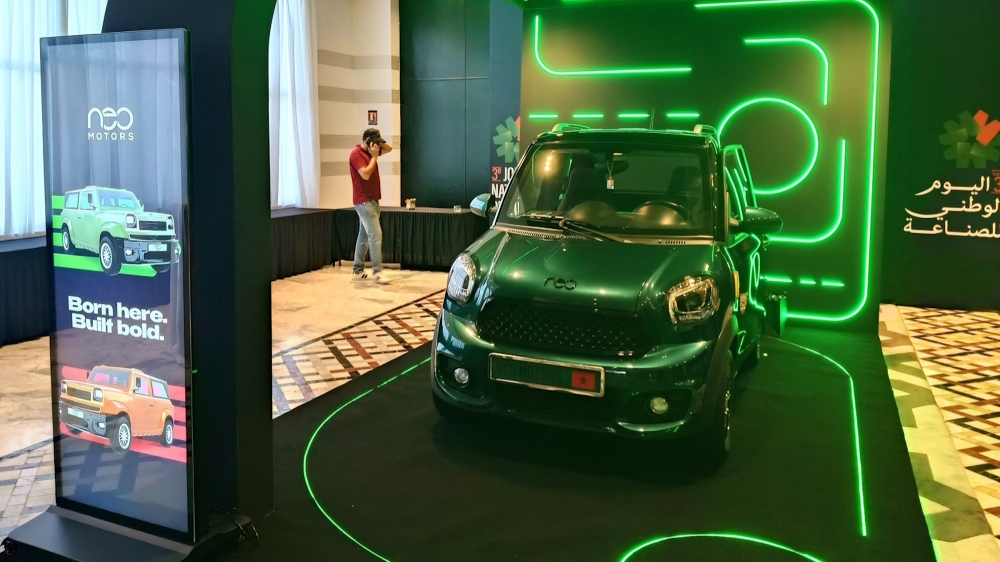


Morocco is emerging as one of Africa’s leading markets in the electric vehicle (EV) and battery manufacturing race, as Chinese investment, government support and development finance accelerate efforts to build a regional battery supply chain.
China’s EV industry is increasingly expanding beyond vehicle exports and assembly, with investments moving into battery materials and component manufacturing. Morocco has positioned itself to capture more value from this shift by combining its established automotive industry with growing battery-related investments.
A major development is the African Development Bank’s approval of a $114 million loan for Gotion High-Tech’s planned battery gigafactory in Morocco. The country has also attracted a $300 million investment from China’s BTR New Material Group for a cathode materials plant in Tangier, while the Cobco joint venture is developing additional battery component manufacturing capacity.
Other investments are extending Morocco’s battery ecosystem. Abu Dhabi-based Falcon Energy Materials has commissioned a 25,000-tonne-per-year anode materials pilot project at Jorf Lasfar near Casablanca, supported by technical partnerships with Chinese companies. Together, these projects are creating links between processed materials, battery components and vehicle manufacturing.
South Africa is pursuing a parallel opportunity, with BYD exploring the possibility of establishing battery manufacturing operations locally. The potential investment could connect the country’s automotive industry and mineral resources with a higher-value segment of the EV supply chain, although South Africa has yet to secure a comparable large-scale battery manufacturing commitment.
The contrasting approaches highlight the importance of industrial policy, infrastructure, skills, financing and reliable supply chains in determining where Africa’s EV manufacturing ecosystem develops. Morocco’s established automotive base and proximity to European markets have strengthened its position, while South Africa brings significant automotive and mineral advantages.
Chinese companies are also playing an increasingly important role in shaping the continent’s emerging EV supply chain. For African economies, the long-term benefits of these investments will depend on how much manufacturing, skills, technology and value addition remain within local markets.
With Morocco currently ahead of many African markets and South Africa seeking to strengthen its position, the next phase of the continent’s EV transition could determine whether Africa remains primarily a market for imported electric vehicles or becomes a meaningful participant in the global battery and EV supply chain.