

Ghana’s government has partnered with 11 leading universities to integrate certifications from the One Million Coders Programme (OMCP) into existing degree and diploma programmes as part of efforts to strengthen digital skills development.
The initiative is designed to narrow the gap between traditional academic education and the practical technology skills increasingly demanded by employers, giving students an opportunity to combine formal qualifications with industry-relevant digital competencies.
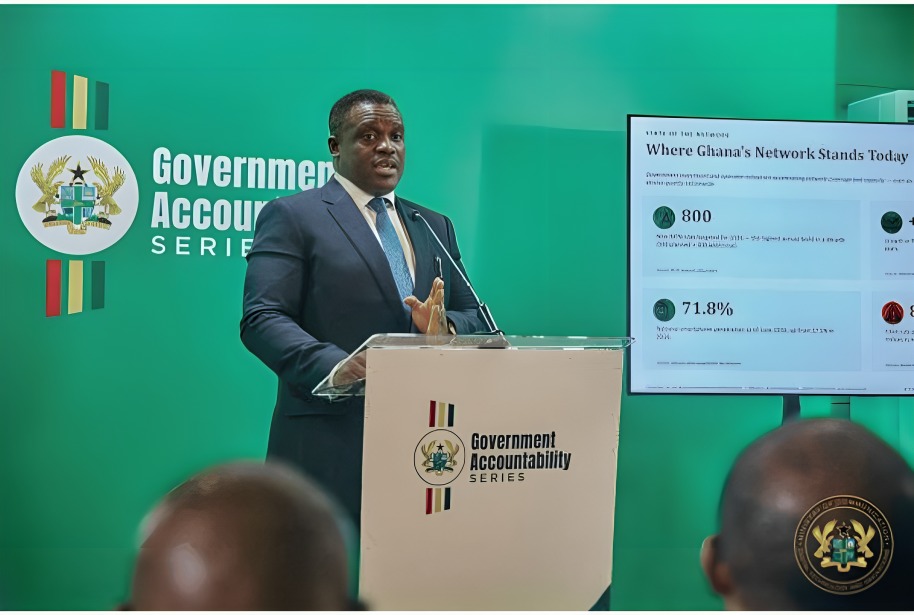
Minister for Communication, Digital Technology and Innovations, Samuel Nartey George, announced the partnership during the Government Accountability Series at Jubilee House in Accra. He said Memoranda of Understanding had been signed with participating universities to enable students to gain digital skills alongside their academic studies.
The participating institutions include the University of Ghana, Kwame Nkrumah University of Science and Technology (KNUST), University of Energy and Natural Resources, Ghana Communication Technology University and the University of Cape Coast, among others.
Implementation is already underway at some institutions. At KNUST, more than 1,000 students have enrolled in the One Million Coders Programme across four centres, including the Department of Computer Science and the Responsible Artificial Intelligence Lab.
Cybersecurity currently accounts for the largest OMCP enrolment, with 8,570 learners, followed by data analytics, AI Essentials, AI Professional and project management. The enrolment figures point to strong interest in technology and emerging digital skills among Ghanaian learners.
Through the university partnerships, students will be able to pursue academic degrees and diplomas while gaining additional certifications focused on practical technology competencies. The approach is intended to improve graduate readiness for an increasingly digital employment market.
The government is also working with the Ministry of Education and the Ghana Education Service to extend foundational digital skills training to students aged 13 to 19.
The expansion is expected to introduce digital skills development earlier in the education system while broadening access to the One Million Coders Programme and supporting Ghana’s efforts to build a digitally skilled workforce.
The programme reflects a broader push to align education with changing labour-market requirements, particularly as demand grows for skills in cybersecurity, artificial intelligence, data analytics and digital project management.