

Egypt is positioning its technology and business services offshoring sector as a major driver of economic growth, foreign direct investment, service exports and skilled employment, with the industry increasingly shifting toward higher-value digital services powered by Generative AI.
Supported by policy frameworks from the Ministry of Communications and Information Technology (MCIT) and the Information Technology Industry Development Agency (ITIDA), Egypt generated $5.2 billion in offshoring services exports in 2025.
The country’s ecosystem currently includes 252 companies operating across 282 global delivery centres, with 177 multinational companies employing more than 195,000 specialists. Egypt’s multilingual talent pool, digital infrastructure, AI capabilities and operational resilience across multiple locations continue to attract global technology and business services providers.
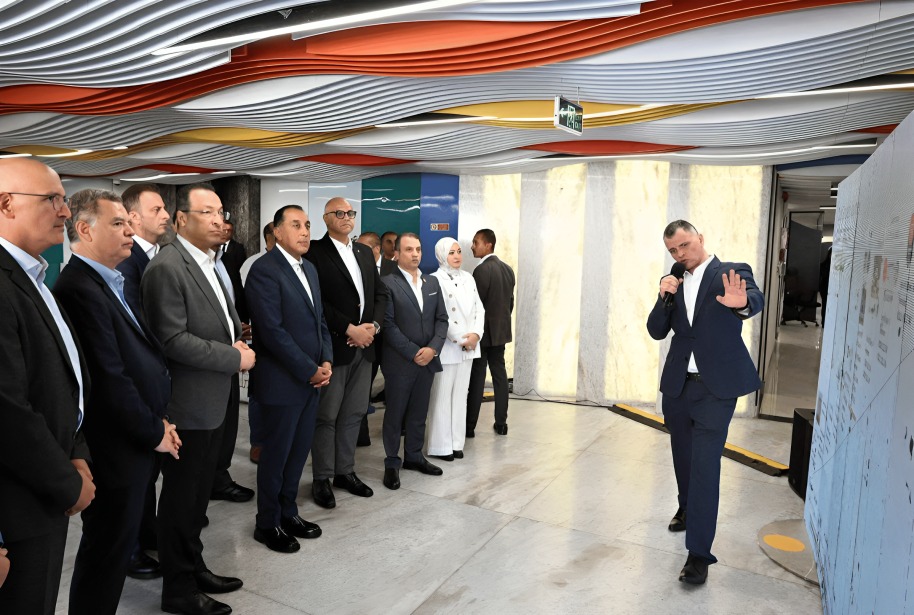
The sector’s expansion was highlighted during an official tour of technology and business services facilities in Alexandria led by Egyptian Prime Minister Mostafa Madbouly, alongside Communications and Information Technology Minister Raafat Hindy, Alexandria Governor Ayman Ateyya and ITIDA CEO Ahmed Elzaher.
The delegation visited Teleperformance, Concentrix, Vodafone Intelligent Solutions and Sutherland. Collectively, the companies employ nearly 15,000 specialists in Alexandria, delivering digital, technology and business services to international markets.
Alexandria is emerging as an important technology and services hub outside Cairo, supported by a large population of university graduates and technology professionals. The city is increasingly hosting operations spanning information technology, enterprise software support, AI-enabled customer experience and business services.
Madbouly described offshoring as a major pillar of Egypt’s economic strategy, highlighting continued investment in digital skills, multilingual capabilities and an enabling business environment.
The government is also seeking to distribute ICT-sector opportunities beyond Cairo, with cities such as Alexandria being positioned to provide global companies with access to skilled regional talent while supporting high-value employment and digital service exports.
Raafat Hindy said the expansion of global companies in Alexandria reflects the evolution of Egypt’s offshoring industry toward specialised, higher-value digital capabilities. The strategy is focused on leveraging the country’s talent, multilingual workforce and digital infrastructure while expanding delivery operations across multiple governorates.
ITIDA CEO Ahmed Elzaher highlighted geographic diversification as an increasingly important factor in competitiveness, scalability and resilience. A broader delivery footprint allows companies to access wider talent pools and increase their ability to scale operations.
Global operators are also expanding their Egyptian operations. Vodafone Intelligent Solutions has 9,500 specialists in Egypt, making the country its second-largest global footprint and representing around one-third of its worldwide workforce. Its Alexandria centre employs approximately 1,100 specialists and provides customer care, digital, shared-services and enterprise transformation capabilities.
Teleperformance employs approximately 26,800 people in Egypt, with around 90% of its local revenues generated from exported services. The company generated €280 million in exported services in 2025 and expects that figure to reach €344 million in 2026. Its four Alexandria delivery centres employ more than 4,000 people, while the company plans to create an additional 18,000 jobs in Egypt over the next three years.
Concentrix operates 13 centres across Egypt with 24,500 employees and generates nearly 99% of its local revenue from service exports across as many as 13 languages. The company is targeting $1 billion in local investment over four years and plans to increase its Egyptian workforce to 35,000 by 2028 while incorporating Generative AI into its digital operations.
Sutherland has also expanded its presence in Alexandria, growing from 65 employees in 2010 to more than 6,000 today. More than 70% of its Egyptian workforce is based in Alexandria, with operations delivered in 16 languages across business operations, technical support and fleet management.
Egypt’s talent pipeline remains central to the sector’s expansion, with approximately 750,000 university graduates entering the labour market each year. This workforce is increasingly supporting specialised areas including semiconductor and integrated circuit design, automotive embedded software and complex research and development.
The country is also investing in digital infrastructure and export incentives to strengthen its position as a scalable destination for AI-enabled customer experience services and complex EMEA and global operations.
The evolution of Egypt’s offshoring industry is particularly visible in business process management and digital services, where local teams increasingly handle financial and accounting operations, human resources, fleet management, complex data processing and enterprise IT services.
Companies are simultaneously integrating Generative AI, automation and other advanced technologies into their Egyptian operations, moving the sector beyond traditional back-office functions toward specialised digital services.
With continued investment in talent, AI capabilities, digital infrastructure and regional delivery centres, Egypt is seeking to strengthen its position in the global digital services market while increasing export earnings, attracting foreign investment and creating high-value employment.