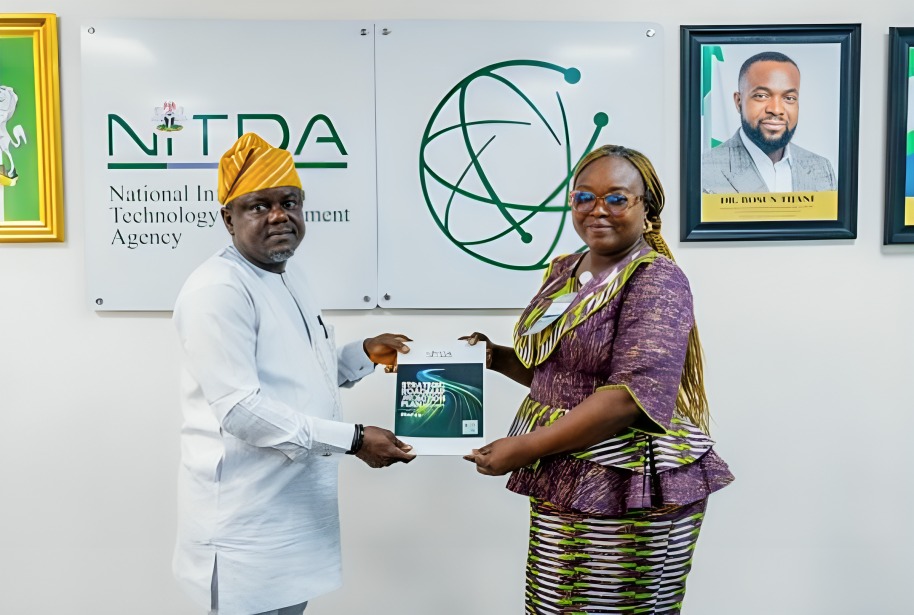


Nigeria’s National Information Technology Development Agency (NITDA) has reaffirmed its commitment to strengthening digital accessibility and ensuring persons with disabilities are included in the country’s digital transformation.
The commitment was made during a courtesy visit by the Centre for Inclusive Development (CID), which presented research findings on digital accessibility and discussed opportunities for stronger standards and greater inclusion across Nigeria’s digital ecosystem.
Representing NITDA Director General Dr Ayodeji Eniola, Director of Corporate Planning and Strategy Inuwa said the findings aligned with the agency’s mandate to ensure that Nigerians are not left behind as digital services expand.
NITDA’s digital literacy programme targets 70% digital literacy nationwide by 2027 and is being implemented across schools, the informal sector and the workforce. The agency said its approach is intended to extend digital skills and access to Nigerians regardless of their status.
Inuwa said NITDA had identified accessibility gaps affecting persons with disabilities within its digital literacy framework and had begun efforts to address them. The agency is also working toward national accessibility standards, while accessibility requirements have already been incorporated into revised website guidelines for government institutions.
Research presented by disability rights advocate, lawyer and researcher Tracy Onabis Agbamu assessed about 30 government digital platforms. The study found that only 47% met the required accessibility threshold.
NITDA was among the platforms that performed strongly in the assessment, which Agbamu linked to the agency’s digital inclusion efforts. However, the research highlighted significant accessibility challenges across private-sector platforms, particularly in banking, fintech and payments.
Agbamu noted that inaccessible digital financial services can force persons with disabilities to depend on third parties, potentially creating privacy and security concerns. She stressed that digital inclusion requires more than digital skills, with platforms also needing to support assistive technologies and independent access.
CID called for NITDA’s support in developing guidance for accessibility statements on government websites, integrating accessibility requirements into procurement and licensing frameworks, and promoting standards across critical sectors.
The Centre also requested technical support in developing and validating a national digital accessibility standard for Nigeria. The engagement underscores the growing importance of accessibility as Nigeria expands digital public services and participation in the digital economy.