

The Uganda Institute of Information and Communications Technology (UICT) is strengthening its contribution to Uganda’s digital transformation through research focused on data governance, interoperability and institutional knowledge management.
The institute presented its research at the 30th Annual International Management Conference (AIMC 2026), held from September 22 to 25 at Imperial Golf View Hotel in Entebbe under the theme “The Knowledge Revolution: Driving Innovation and Sustainable Development in Africa.”
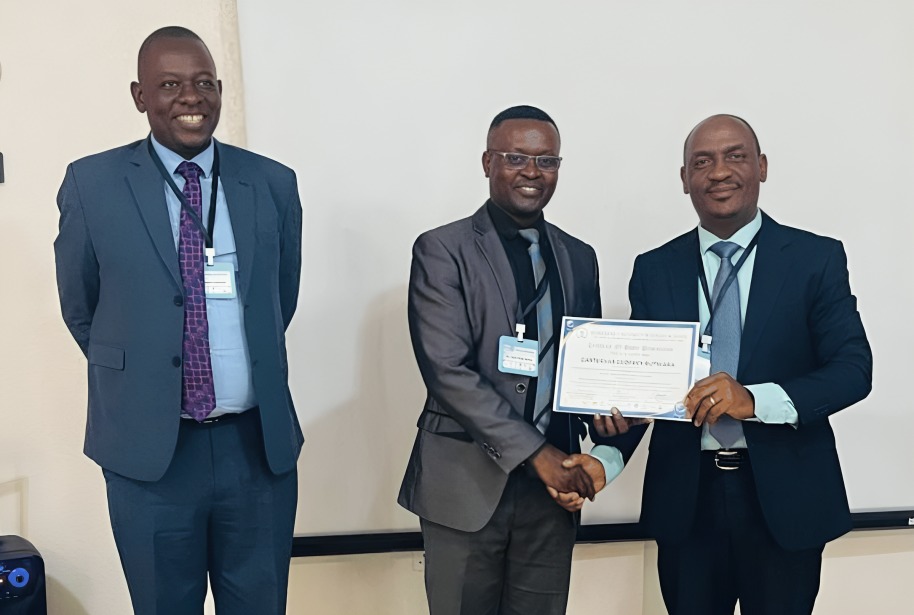
Gastervas Geofrey Rutwara Mugume, a lecturer in UICT’s Department of ICT & Engineering and primary author of the research, presented a study titled “Transforming Institutional Data into a Knowledge Ecosystem: A Governance Framework for Inclusive Digital Transformation in Uganda.”
The research examines challenges facing tertiary institutions as they generate increasing amounts of academic, administrative, financial, research and innovation data. It notes that fragmented systems and limited interoperability can make it difficult for institutions to turn this information into actionable knowledge.
The study proposes an Institutional Knowledge Ecosystem Governance Framework that connects data governance, interoperability, analytics, knowledge management, institutional intelligence and innovation as complementary capabilities for digital transformation.
The findings also identified a relationship between the maturity of an institution’s knowledge ecosystem and its readiness for digital transformation, highlighting the importance of integrated institutional capabilities alongside technology adoption.
The research recommends stronger data stewardship, interoperable systems, institutional knowledge repositories, analytics, AI-enabled knowledge services and greater use of research to support innovation and decision-making.
The proposed framework could also support the development of Uganda’s Open Education Data Portal (OEDP) beyond data publication towards a trusted education knowledge ecosystem. This would include common metadata and stewardship, privacy and interoperability controls, analytics, research capabilities, AI-enabled decision support and knowledge reuse.
UICT said the research supports its priorities in Digital Government and Public Service Transformation, as well as Digital Trust and Critical Digital Infrastructure.
The work highlights the growing importance of connecting education, research, data governance and innovation as Uganda develops its digital and knowledge economy.