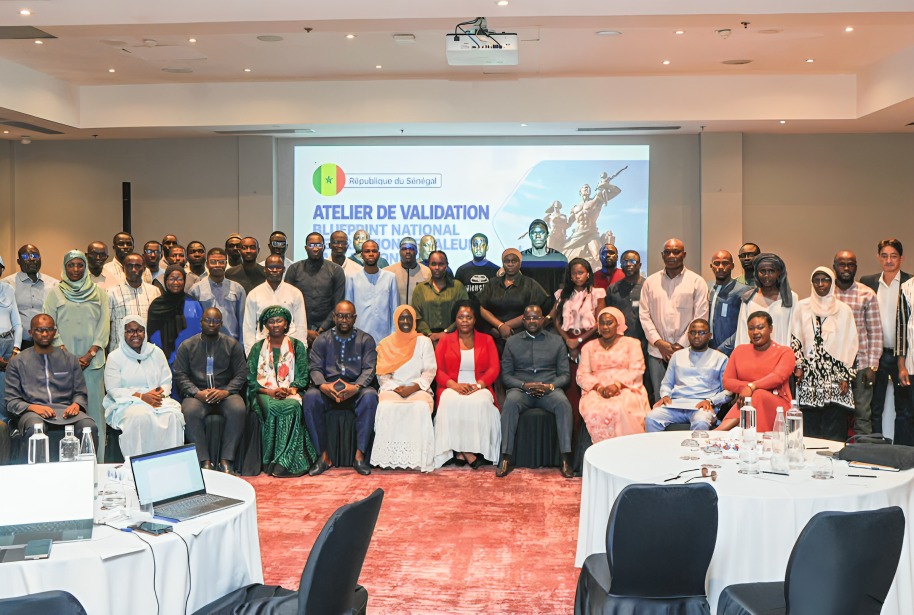


Senegal’s Ministry of Telecommunications and Digital has held a national workshop to validate a national Blueprint on Data Valorisation as the country works to strengthen the economic, social, environmental and institutional value generated from data.
Held on September 21 and 22, 2026, the two-day workshop was organised through the ministry’s Directorate of Information and Communication Technologies, with support from Smart Africa under its Data Governance in Africa programme and GIZ.
Senegal is one of the pilot countries participating in the initiative alongside Kenya and Lesotho. The project has been underway since June 2026 and seeks to make data a driver of value creation across different areas of the economy and society.
National consultations conducted on July 1 and 2 identified potential data- and artificial intelligence-based use cases across sectors. These consultations were complemented by an inventory and mapping of Senegal’s national data ecosystem, helping inform an initial roadmap.
The latest workshop brought together representatives from government ministries, public institutions, universities, businesses, technology stakeholders, civil society and technical and financial partners.
Stakeholders reviewed and provided feedback on the proposed roadmap, implementation framework and monitoring and evaluation mechanism. The contributions will be used to refine the blueprint before its finalisation.
The initiative aligns with Senegal’s Vision 2050 and New Deal Technologique, as well as the country’s National Data Strategy and National Artificial Intelligence Strategy.
The blueprint is expected to support the development of data- and AI-based services, strengthen the competitiveness of strategic sectors, improve public services and promote sustainable and inclusive economic growth.
The project also highlights Senegal’s efforts to establish stronger frameworks for transforming data resources into practical applications that can support citizens, public institutions and businesses.
With the validation phase now completed, the ministry will use stakeholder contributions to further refine the roadmap and implementation approach ahead of finalisation.