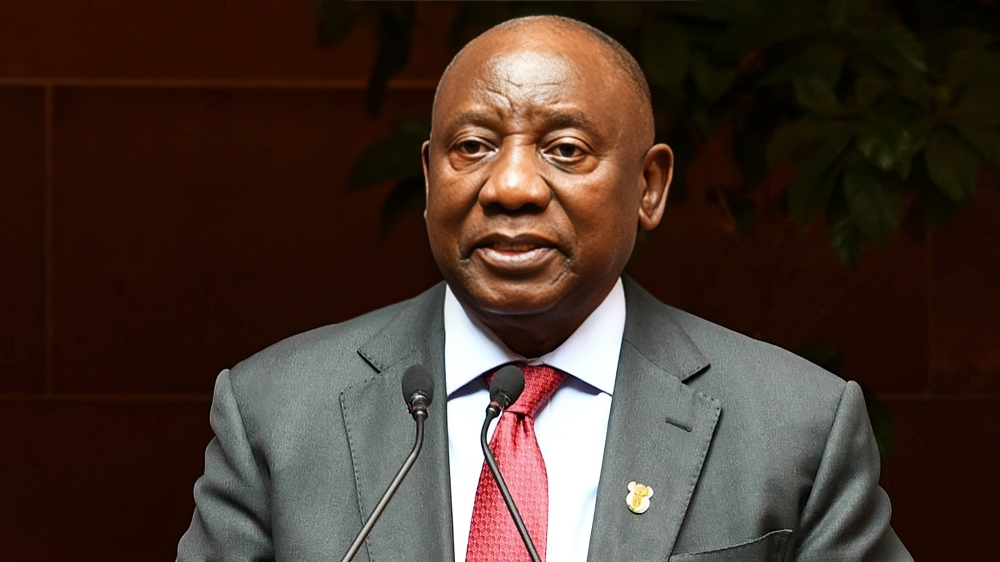


South Africa marked a significant milestone in its digital transformation journey by hosting the first-ever Google Cloud Summit on African soil, bringing together global technology executives, policymakers, and industry leaders to discuss the future of cloud computing and artificial intelligence across the continent. Held under the theme “Google Cloud is building for Africa,” the summit highlighted Africa’s growing importance in the global technology landscape while reinforcing South Africa’s position as the continent’s leading cloud infrastructure hub. Opening the event, President Cyril Ramaphosa emphasized that the summit represented far more than a technology conference—it symbolized Africa’s opportunity to shape the next era of innovation driven by cloud computing, AI, and digital infrastructure. His address positioned South Africa not merely as a consumer of global technology but as an emerging center for developing, commercializing, and exporting African-built digital solutions to the world.
President Ramaphosa outlined an ambitious vision that extends beyond expanding data center capacity, stressing that the country’s long-term objective is to build globally competitive technology companies, nurture world-class researchers, commercialize African innovation, and create high-value digital jobs. Drawing comparisons between artificial intelligence, cloud computing, electricity, the internet, and the steam engine, he described AI as one of the defining general-purpose technologies of this generation—one capable of transforming economies, industries, and societies. He emphasized that Africa intends not only to benefit from these technological advances but to actively contribute to their development. Backing this vision with evidence, the President highlighted South Africa’s estimated 70% share of Africa’s hyperscale data center capacity, its status as the continent’s largest cloud market, and research showing that cloud adoption among major African enterprises now rivals or exceeds adoption levels in North America and China. These achievements reinforce South Africa’s growing reputation as a strategic destination for global digital infrastructure investment.
The summit also underscored the critical role that cloud infrastructure and artificial intelligence will play in advancing South Africa’s national development priorities. President Ramaphosa linked cloud adoption directly to Operation Vulindlela, the government’s structural reform programme, explaining that secure, interoperable digital public infrastructure is essential for modernizing healthcare, education, financial inclusion, public administration, and government service delivery. He further called on Google and other hyperscale cloud providers to support the development of sovereign digital capabilities, highlighting initiatives such as the Sebowa Cloud platform hosted by the Council for Scientific and Industrial Research (CSIR). In addition, the President stressed that digital sovereignty is becoming increasingly important in the AI era, arguing that nations must develop the ability to manage their own data, strengthen local digital ecosystems, and maintain greater control over technologies that power economic growth. He also welcomed Google’s continued investment in AI skills development and digital literacy programmes, emphasizing that Africa’s future competitiveness depends on empowering citizens to become innovators, entrepreneurs, researchers, and creators rather than simply consumers of imported technologies.
While Google confirmed new investments aligned with South Africa’s Digital Public Infrastructure agenda and AI skills initiatives, financial details were not disclosed during the summit. Nevertheless, the event builds upon Google’s broader $1 billion Africa digital transformation commitment announced in 2021, which includes investments in subsea cable infrastructure and the Johannesburg Cloud Region that became operational in 2024. The summit also highlighted the increasingly competitive landscape among global hyperscale cloud providers operating in Africa. Microsoft has significantly expanded its Azure infrastructure investments in South Africa, while Amazon Web Services continues strengthening its regional presence through Cape Town-based data centers. This growing competition is shifting beyond pricing alone, with providers increasingly competing on local infrastructure, data sovereignty, AI capabilities, cybersecurity, compliance, and enterprise cloud services. As hyperscale providers continue expanding across Africa, businesses, governments, and developers are expected to benefit from improved cloud availability, enhanced service offerings, stronger local support, and greater investment in digital ecosystems that accelerate innovation across multiple industries.
For enterprises, startups, technology leaders, and policymakers across Africa, the inaugural Google Cloud Summit represents a defining moment in the continent’s digital evolution. President Ramaphosa’s message reinforced the importance of building an African digital economy capable of competing globally through innovation, cloud infrastructure, AI adoption, and investment in human capital. As organizations increasingly embrace cloud computing to modernize operations, improve efficiency, strengthen cybersecurity, and deploy AI-driven solutions, the availability of world-class cloud infrastructure within Africa will become an increasingly important competitive advantage. The summit also demonstrated growing confidence from global technology companies in Africa’s long-term economic and technological potential, with South Africa emerging as a strategic gateway for digital investment across the continent. As cloud adoption accelerates, AI capabilities mature, and digital skills continue expanding, Africa is positioning itself not only as a fast-growing technology market but also as a meaningful contributor to the future of global digital innovation, creating new opportunities for businesses, entrepreneurs, governments, researchers, and communities across the continent.