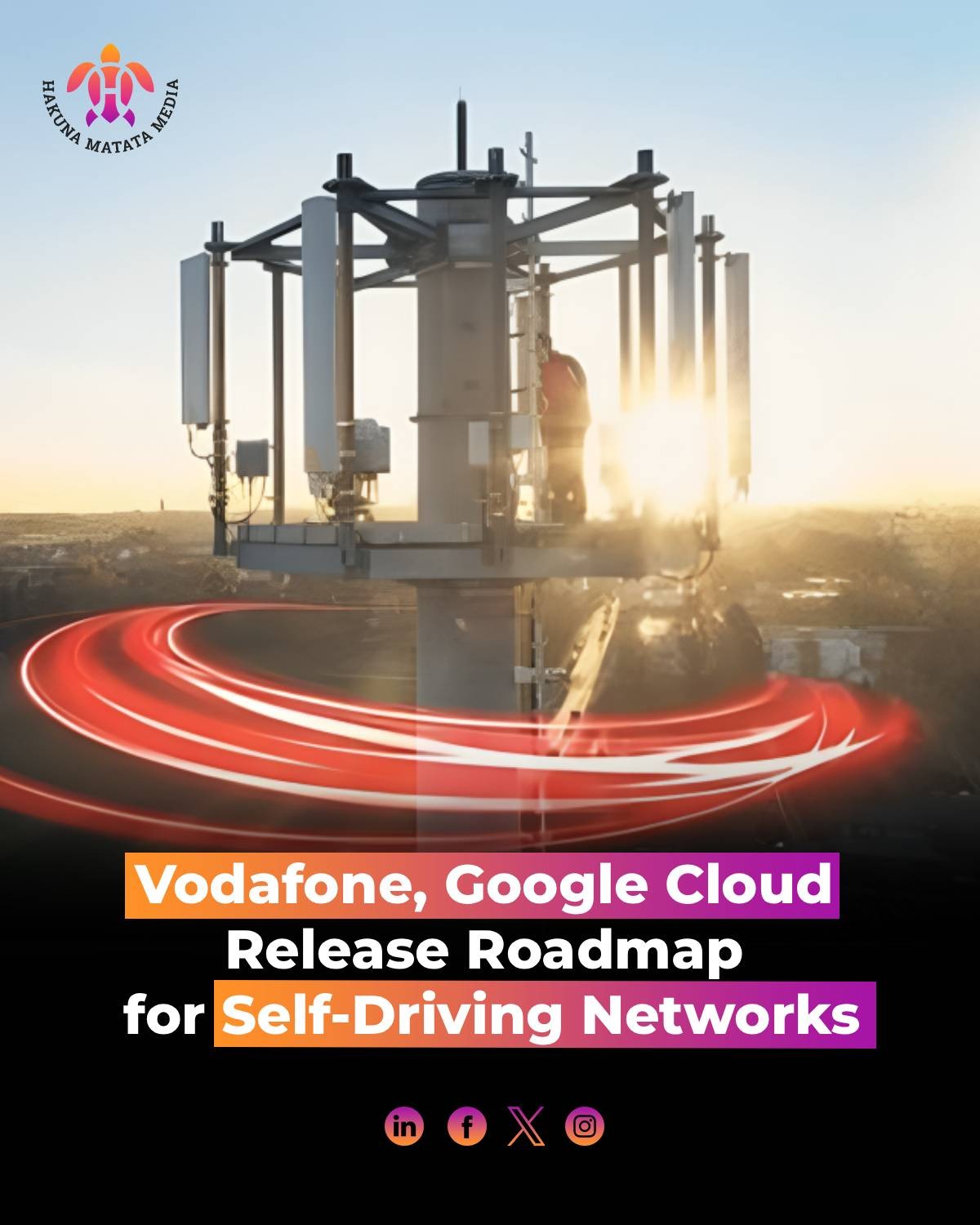


Vodafone, Google Cloud, and TM Forum have jointly released a new technical white paper titled “Self Optimising Autonomous Networks: An Implementation Guide,” providing the telecommunications industry with a practical roadmap for transitioning from traditional network operations to intelligent, intent-based autonomous networks. The publication represents a significant milestone in Vodafone’s autonomous network strategy and combines Vodafone’s network engineering expertise, Google Cloud’s advanced AI capabilities, and TM Forum’s leadership in industry standards to help operators accelerate their automation journeys.
As telecom networks become increasingly complex due to rising data consumption, 5G deployments, cloud-native architectures, and evolving customer demands, traditional manual management approaches are becoming less effective. The white paper highlights how artificial intelligence, advanced analytics, and closed-loop automation can enable networks to self-optimize, self-heal, and proactively adapt to changing conditions. Instead of manually configuring systems and responding to issues after they occur, operators can define desired business and network outcomes while autonomous systems continuously work to achieve and maintain them.
A central theme of the framework is intent-based networking, where operators specify objectives such as network performance, service quality, latency, or throughput, and intelligent systems automatically determine the actions required to meet those goals. Through closed-loop automation, networks can continuously observe, analyze, decide, and act in real time across multiple layers of the infrastructure. This approach reduces operational complexity, improves resilience, enhances service reliability, and enables more agile responses to changing network conditions and customer requirements.
The paper also emphasizes the role of AI agents, knowledge graphs, digital twins, and network data lakes as foundational technologies for autonomous operations. By combining localized AI capabilities embedded within network infrastructure with centralized AI agents operating across domains, operators can gain deeper intelligence and predictive capabilities. For example, while local automation can address congestion issues at a specific network node, centralized AI can analyze broader business objectives and external data sources such as weather patterns and social trends to anticipate demand and optimize network resources proactively.
According to the paper, autonomous networks have the potential to unlock significant business value, with industry estimates suggesting that operators could generate approximately $800 million annually in additional value through improved efficiency, automation, and customer experience enhancements. However, achieving this vision requires effective orchestration of multiple closed-loop systems, strong governance frameworks, security controls, and human oversight to ensure accountability. As the telecommunications industry moves toward AI-native operations, the collaboration between Vodafone, Google Cloud, and TM Forum provides an important blueprint for building the next generation of intelligent, self-driving networks.